Field Trip Offerings
For an additional fee two field trips are offered as part of the conference registration. When registering there will be an option to add the Monday and Friday field trips. These field trips will be submitted to the New York State Council of Professional Geologist (NYSCPG) for Professional Development Hours.
Monday, October 5, 2026, 7:30 AM–5 PM
Karst Hydrology of the Northern Fox Creek Upland; East Central New York State, USA
Field Trip Summary
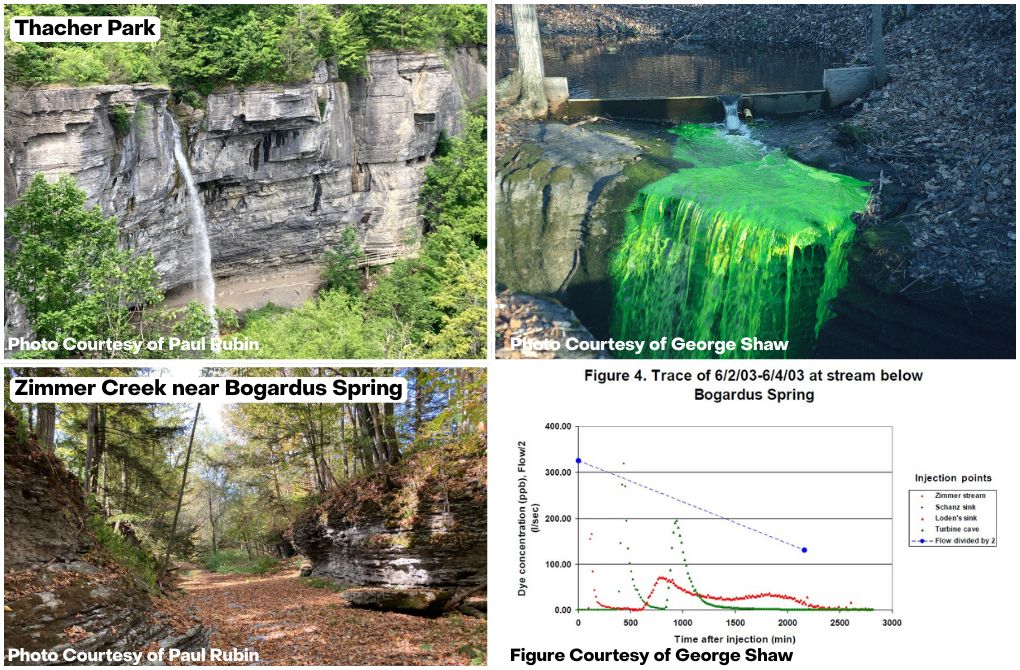
This field trip will highlight an upland area boasting Skull, Knox, and Thunder Hole caves, three of New York State’s longest. Visit cave entrances, sinkholes, a farm spring, and world-renowned John Boyd Thacher Park - the key to the geology of North America. Grasp the fascinating geomorphic history of the region; learn of multiple glaciations, new cave discoveries, and researchers’ paleoclimatic findings.
8 Professional Development Hours (PDHs) are available upon completion.
Please be ready to board the bus at the Albany Capital Center entrance at 7:30 AM.
Field Trip Leaders
Paul Rubin: Professional Geologist; HydroQuest, NY and Northeastern Cave Conservancy; Geology, Geomorphology, "Karst of Albany and Schoharie Counties, New York State" (2025 Field Trip Guidebook with emphasis on the interaction between glaciation and karst).
George Shaw: Professor Emeritus, Union College, NY; Karst Hydrogeology, Quantitative dye tracing in karst, "Groundwater Geohydrology of the Town of Wright" (Schoharie County, NY).
Robert "Bob" Simmons: Professional Geologist & Licensed Environmental Professional; Principal and Chief Hydrogeologist, HRP Associates, Inc., CT and Northeastern Cave Conservancy; Geology, Contaminant Transport and Forensics, Environmental Due Diligence.
Field Trip Cost: $150
Friday, October 9, 2026, 7:30 AM–1 PM
Geology of Howe Caverns
Field Trip Summary
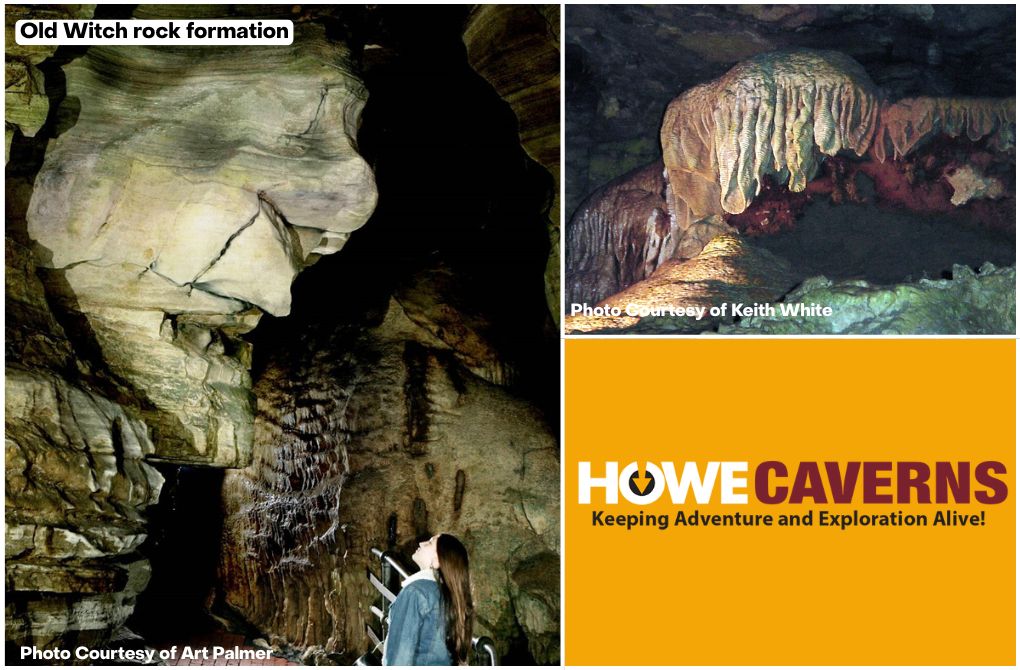
With a tour length of 7,920 feet, Howe Caverns is the largest show cave in the Northeastern United States and is the second most visited natural attraction in the state of New York. The cave was discovered in 1842, and tours began shortly thereafter. The caverns are formed in thickly bedded Lower Devonian aged Coeymans Limestone and thinly bedded Upper Silurian aged Manlius Limestone, both part of the Helderberg Group. Sediments preserved in the caverns, isolated from terrestrial erosive processes, provide a window into New York State’s Cenozoic history. Several glacial deposits, including a pebble-rich melt-out till, are well preserved. The deeply weathered condition of insoluble pebbles in the till indicates an age exceeding one million years.
Attendees will take elevators down to the main passage, a large phreatic tube up to 33 feet tall and 20 feet wide. The tour includes a serene boat ride on the River Styx, a subterranean cave stream, and views of speleothems and sculpted rocks assigned names such as the "Bridal Altar" and the “Old Witch”. The cave temperature is 52°F (11°C) so a jacket or sweater and closed-toed comfortable walking shoes are recommended. Flip flops are NOT permitted in the cave. The cave tour consists of a 1.25 mile walk with a 0.25 mile boat ride. There are 139 stairs throughout the tour. The cave is not handicap accessible.
3 Professional Development Hours (PDHs) are available upon completion.
Please be ready to board the bus at the Albany Capital Center entrance at 7:30 AM.
Field Trip Leaders
Sarah Cadieux: Ph.D: Senior Lecturer. Associate Director of Environmental Sciences, Rensselaer Polytechnic Institute, Troy, NY